
12 August 2025
A joint venture to improve power outage planning for life support customers as been named the Enhancing Community winner at the Shared Value Awards 2025, held on Thursday 31 July.
The Life Support Power Outage Plan initiative was co-led by Essential Energy, alongside other energy businesses from across the sector, in a coordinated collaboration under The Energy Charter to address a critical gap in emergency preparedness for Life Support customers.
According to Essential Energy’s Head of Customer, Mike Cole the recognition celebrates the leadership taken to help Australians, who rely on medical equipment at home, stay safe during power outages.
“Life Support customers are some of our most vulnerable, and it's pleasing to see this collaboration recognised. It has delivered real tools and increased awareness around the importance of backup planning. It’s a meaningful step forward in how we our support customers in times of emergency,” Mike said.
Protecting customers who rely on medical equipment at home when the power goes out presents a great challenge. For many Australians who rely on life support equipment, live with chronic health conditions, or face mobility and communication challenges unplanned outages can pose serious risks to health and safety. This is only amplified in times of extreme weather events or regional, rural and remote areas, where resources may already be limited.
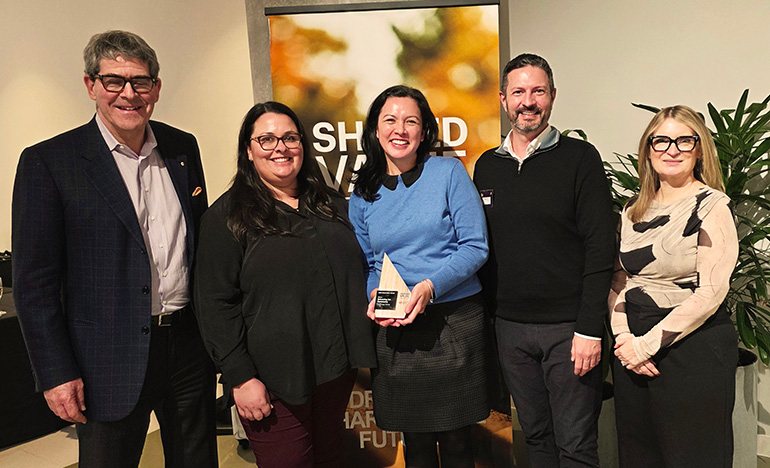
From left to right, Peter Yates AM - Chair, Shared Value project , Sophie McRae - SA Power Network, Bec Jolly - The Energy Charter, Mike Cole – Head of Customer, Essential Energy, Sarah Downie - CEO, Shared Value Project.
Through consultations with life support customers, carers and healthcare providers, The Energy Charter identified a critical gap: there were no accessible, personalised tools to help these individuals prepare for power disruptions. Existing resources were often generic, difficult to navigate, or not tailored to the specific needs of people using equipment like ventilators, electric wheelchairs or refrigerated medicines.
“Together, along with extensive consultation with over 200 individuals with lived experience, the project has delivered accessible planning tools, translated resources, and a simple “CHECK. PLAN. DO.” framework to help vulnerable customers prepare for unplanned power outages,” Mike explained.
“As extreme weather events become more frequent, initiatives like the Life Support Power Outage Plan will play an increasingly vital role in building community resilience.”
With over 25,000 users reached and strong engagement from life support customers, the initiative has helped improve preparedness, build confidence, and strengthen relationships between energy providers and the communities across Australia.
Individuals who rely on medical equipment at home can visit lifesupport.poweroutageplan.com.au to access the resources available.


